
Consumer Reports Power Lift Chairs: What You Need to Know Before Buying
Independent research, testing insights, and practical guidance to help you choose a safe, comfortable, and reliable power lift recliner for yourself or a loved one.
SEE TOP PICKSWhy This Guide Matters: A power lift chair is more than furniture—it's a mobility aid that can restore independence, ease post-surgery recovery, and reduce fall risk. But not all lift chairs are created equal. This guide distills independent testing data, clinical safety considerations, and real-world owner feedback so you can buy with confidence.
What Independent Testing Reveals About Power Lift Chairs
When evaluating a power lift chair, the most important factors aren't looks or brand name—they're lift height, recline speed, comfort, and adjustability. In Consumer Reports' lab testing of 10 lift chair models, several key insights emerged that every shopper should know before making a purchase.
Lift height range among tested models varied significantly, from 25 inches to 29½ inches at the top of the lift stroke. Chairs with higher lift assist make it easier to reach a standing position without straining, and since you can always stop the lift when comfortable, opting for a chair with more lift than you think you need is a smart strategy[citation:1]. The speed from fully reclined to upright ranged from 32 to 48 seconds—an important consideration if you need to get up quickly or have limited patience[citation:1].
One of the most underappreciated features is motor configuration. Single-motor chairs move the backrest and footrest together as one unit, which is fine for basic sit-to-stand assistance. Dual-motor chairs allow independent control—you can raise your feet without reclining your back, or recline deeply while keeping knees comfortable. For anyone managing swelling, circulation issues, or recovering from surgery, this flexibility is invaluable[citation:1][citation:11].
Key Testing Insight: In Consumer Reports testing, the Best Choice Products Electric Lift Chair was the lightest model but received low comfort ratings. The La-Z-Boy Aster Platinum, the most expensive tested, was the slowest mover with the lowest lift assist. These findings underscore a crucial point: price does not guarantee performance[citation:1].
The Four Measurements That Matter Most
Sizing is the single biggest reason a lift chair ends up unused. A chair that's too deep forces you to slide forward, losing back support. Too wide, and you lose the arm support you need to push yourself up. Too high, and your feet dangle—increasing fall risk during transfers[citation:8][citation:11].
Before you shop, measure these four dimensions against the user's body:
Seat height: When seated upright, feet should rest flat on the floor with knees at roughly 90 degrees. If feet dangle or knees sit higher than hips, the chair is the wrong height.
Seat depth: You should be able to sit fully back against the backrest with two to three fingers of space behind your knees. Too deep means poor lumbar support; too shallow means insufficient thigh support[citation:11].
Seat width: Hips should be supported without pressing against the armrests. A chair that's too wide reduces side-to-side stability, making transfers harder[citation:8].
Weight capacity: Standard models typically handle 300 to 375 pounds, while heavy-duty bariatric chairs extend to 400 to 600 pounds with wider, deeper seating. Choose a capacity comfortably above the user's weight—never right at the limit[citation:15].
Safety Considerations Every Caregiver Should Know
Power lift chairs are generally safe when matched correctly to the user. However, clinical guidance highlights important risk factors. For individuals with cognitive decline or memory impairment, operating a lift chair unsupervised can be dangerous—users may press controls randomly, fail to stop at a safe standing angle, or attempt to stand without their mobility aid in reach[citation:6].
If the intended user has conditions affecting judgment or memory, consider whether the chair should be unplugged when they are alone, or whether supervision is necessary during use[citation:6].
Two additional safety features deserve attention. First, battery backup (typically two 9-volt batteries in the control box) provides enough power for one full cycle to bring a reclined chair upright during a power outage—essential for anyone who might be alone when the electricity fails[citation:15]. Second, enclosed lift mechanisms protect curious pets and small children from pinch points, though this feature is rare and typically found only on premium models[citation:1].
Medicare coverage is another practical consideration. Medicare Part B may cover the motorized lift mechanism (not the chair itself) if a doctor prescribes it for a qualifying condition such as severe arthritis of the hip or knee, or a neuromuscular disease. You would pay 20% of the Medicare-approved amount for the lift device after meeting your deductible, plus the full cost of the chair[citation:3][citation:10].
Top-Rated Power Lift Chairs to Consider
⚠️ AFFILIATE DISCLOSURE: This website contains affiliate links. As an affiliate Associate, we earn from qualifying purchases. If you make a purchase through these links, we may receive a small commission at no additional cost to you. Read our full affiliate policy.

KWKSV Power Lift Recliner Chair for Elderly,8-Point Vibration Massage & Heat,Electric Lift Chair with Two Cup Holders,4 Side Pockets,Extended Footrest for Living Room
Check price on Amazon
Korser Oversized Power Lift Recliner Chair with Massage and Heat for Elderly, 26" Overstuffed Wide Electric Recliner with 2 Side Pockets, Cup Holders, Lift Chair for Living Room, Faux Leather, Black
Check price on Amazon
Power Lift Recliner Chair for Elderly, Electric Reclining Lift Chair with Massage and Heating, Comfy Overstuffed Recliner Single Sofa with Cup Holders, Pockets, USB Charge Port for Living Room,Brown
Check price on Amazon
MEROUS Dual Motor Power Lift Recliner Chair for Elderly Infinite Position | Quiet Independently Control Back/Lift/Footrest,Lay Flat,Heat & Massage,Gentle Vibration,USB Ports,Soft,Smooth,Leather(Brown)
Check price on Amazon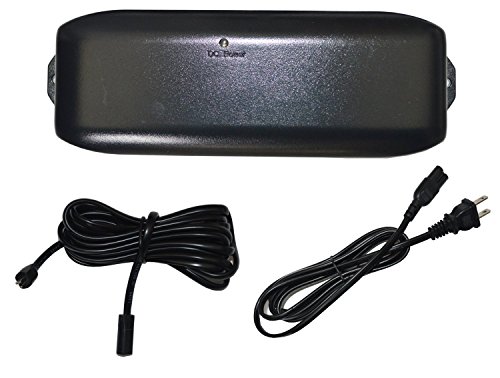
Power Recliner or Lift Chair Power Supply Replacement Transformer Kit
Check price on Amazon
CUGLB Lift Chair Remote Replacement, 5 Pin 2 Buttons Straight Power Recliner Remote, Power Recliner Replacement Compatible for Most Lift Chair Brands
Check price on Amazon
GarveeHome Power Lift Recliner Chair - Heat and Massage, PU Leather Electric Lift Recliner for Elderly & Mobility Impaired, Adjustable Back and Legs, Heavy Duty Lift Chair for Seniors
Check price on Amazon
Power Lift Recliner Chair for Elderly with Lumbar Heat and Massage Grey | Electric Lift Recliner Chair with Remote Control and USB Port,4 Storage Pockets & 2 Cup Holders for Living Room
Check price on AmazonSingle vs. Dual vs. Triple Motor: What You Actually Get
The motor configuration determines what your chair can physically do. Understanding this before you buy prevents the most common source of post-purchase regret[citation:11].
Single motor: Backrest and footrest move together as one unit, reclining to about 45 degrees. This is sufficient for basic sit-to-stand assistance and simple TV-watching positions. One button operation makes it easy to learn[citation:11].
Dual motor: Backrest and footrest operate independently. You can raise the footrest while keeping the back upright (ideal for reading or watching TV with legs elevated), or recline nearly flat for napping or sleeping. This is essential for anyone managing swelling, poor circulation, reflux, or post-surgery recovery[citation:11].
Triple or quad motor: Adds independent headrest and lumbar adjustment on top of dual-motor function. These are worth considering for complex postural needs identified by an occupational therapist, or for users who want precise control over neck and lower back support during long sitting sessions[citation:11].
For those who need a chair that can serve as a primary sleeping surface, a lay-flat or infinite-position model reclines to roughly 180 degrees with no painful gap between seat and footrest. These typically require dual motors and are designed for users who can no longer sleep comfortably in a bed[citation:15].
Fabric and Upholstery: Practicality Over Aesthetics
For a chair that will be used daily, upholstery is a functional decision, not a style one. If incontinence, spills, or heavy wear are factors, the practical answer may surprise you: real leather is one of the harder materials to keep clean, while modern performance fabrics and polyurethane (faux leather) clean up more easily[citation:15].
Manufacturers like Pride Mobility offer easy-clean options such as Sta-Kleen, a polyurethane that is antimicrobial and stain-resistant. Golden Technologies offers Brisa, a polyurethane that blocks liquid from seeping into the cushion[citation:15]. If incontinence is a concern, ask specifically for a waterproof performance fabric—not just water-resistant, which may only handle light spills[citation:15].
For general household use, leather and leather-match options are durable and wipeable, while fabric offers a warmer feel and a wider range of colors. The best choice depends on your daily routine, not the showroom aesthetic[citation:4].
Medicare Coverage and Cost Expectations
Power lift chairs typically cost between $800 and $2,500, depending on motor configuration, upholstery, and extra features. Premium brands like La-Z-Boy and Golden Technologies can exceed this range, while budget models from brands like MCombo and VEVOR often fall at the lower end.
If you're considering Medicare coverage, understand that the process requires a prescription from your doctor and purchase through a Medicare-enrolled DME supplier. Medicare Part B covers 80% of the motorized lift mechanism only—you pay 20% of the approved amount plus the full cost of the chair itself. Qualifying conditions include severe arthritis of the hip or knee, severe neuromuscular disease, or inability to stand from a regular chair without assistance[citation:3][citation:10].
Medicare Advantage plans may offer different coverage, so check with your specific plan provider before purchasing[citation:3].
Common Mistakes to Avoid
Focusing on price instead of daily use is the most frequent error. A single-motor chair that seemed like a bargain becomes frustrating if you later realize you need independent leg elevation for circulation or recovery[citation:4].
Getting the size wrong runs a close second. Many people choose a larger chair because it looks more comfortable in a showroom, but if it doesn't match the user's height and proportions, it can feel awkward and unsafe. Industry feedback suggests fit problems are a leading cause of returns, with some estimates as high as 20% to 30%[citation:7].
Finally, buying online without trying the chair first is risky for a product this personal. A showroom visit lets you test seat firmness, arm height, control layout, lift angle, and footrest position—details no product page can convey. If a showroom isn't available, medical supply companies often rent lift chairs by the week or month, providing a low-risk trial before committing[citation:1][citation:7].
Bottom Line: The best power lift chair for you is the one that fits your body, matches your daily needs, and provides safe, reliable lift assistance. Use independent testing data and clinical guidance as your foundation, then prioritize fit and function over brand name or price tag. A well-chosen lift chair restores independence and comfort—a poorly chosen one sits unused in the corner.