
Complete Projector Screens Buying Guide
Find the perfect projector screen for your home theater. Compare types, materials, sizes, and installation options to create the ultimate cinematic experience.
A high-quality projector screen is the centerpiece of any serious home theater. It transforms a blank wall into a stunning canvas for movies, sports, and gaming. But with so many options available—fixed frame, motorized, portable, outdoor—choosing the right one can feel overwhelming. This guide cuts through the confusion, giving you everything you need to select the perfect screen for your space, budget, and viewing habits.
🎬 Screen Types
Fixed frame, motorized, pull-down, portable, and outdoor screens—each designed for a specific use case.
📐 Size & Aspect
Choose the right diagonal size and aspect ratio (16:9, 2.35:1) based on your room and projector specs.
🎨 Screen Materials
From matte white to grey and ALR (ambient light rejecting) fabrics, the material affects brightness and contrast.
Types of Projector Screens
The first decision is screen type. Each has unique advantages depending on your room, usage, and whether you prefer a permanent setup or flexibility. Here's a breakdown of the most common options:
Fixed Frame Screens
A fixed frame screen is a permanent installation with a rigid frame and a tensioned screen surface. It offers the flattest, most wrinkle-free image and is ideal for dedicated home theaters. The border frames often have a velvet or black finish to absorb projector light overshoot, enhancing perceived contrast. Prices typically start around $300 for a 100-inch model and can reach $1,500+ for larger, premium ALR screens.
Motorized & Electric Screens
Motorized projector screens are ceiling-mounted and retract into a housing when not in use. They are perfect for multi-purpose rooms where a permanent screen would be intrusive. Many models include RF or IR remotes and can be integrated with smart home systems. Prices range from $500 for a basic 100-inch to over $2,500 for large, tensioned models with quiet motors.
Manual Pull-Down Screens
Manual pull-down screens are the most budget-friendly option. They mount to the ceiling or wall and are pulled down when needed. While affordable, they are prone to wrinkles and have less tension than fixed frames. A good 100-inch manual screen costs between $100 and $300.
Portable & Outdoor Screens
For backyard movie nights or presentations, portable projector screens are essential. These include inflatable screens, tripod-mounted screens, and pull-up screens. Outdoor screens often feature weather-resistant materials and ground stakes. Prices range from $80 for a small tripod screen to $500+ for large inflatable models.
Projector Screen Comparison
| Screen Type | Best For | Price Range | Pros | Cons |
|---|---|---|---|---|
| Fixed Frame | Dedicated theaters | $300–$1,500+ | Flattest surface, premium image | Permanent, not portable |
| Motorized | Multi-purpose rooms | $500–$2,500+ | Retracts, convenient | More expensive, motor noise |
| Manual Pull-Down | Budget setups | $100–$300 | Affordable, easy to install | Wrinkles possible, less durable |
| Portable/Outdoor | Outdoor or travel | $80–$500+ | Mobile, versatile | Less stable in wind, setup time |
Screen Materials & Gain Explained
The screen material affects brightness, contrast, and viewing angle. Here's what you need to know:
- Matte White (Gain 1.0): The standard choice. It provides accurate color reproduction and a wide viewing angle, making it ideal for dark rooms with controlled lighting.
- High Contrast Grey (Gain 0.8–1.0): Improves black levels and contrast in rooms with ambient light. It's a great choice if you have some wall color reflection.
- ALR (Ambient Light Rejecting): These screens have optical microstructures that reject light from the sides (like room lights or windows) and reflect projector light back to the viewer. They allow you to watch in moderate ambient light. Prices start around $1,000 for a 100-inch screen.
- High Gain (1.3–2.0): Boosts brightness but narrows the viewing angle. Useful for 3D or bright rooms, but can cause hot-spotting.
💡 Pro Tip: For a dedicated dark home theater, a matte white screen with 1.0 gain is the safest, most accurate choice. If your room has light-colored walls or some ambient light, consider a grey or ALR screen. The home theater seating and acoustic panels you choose will also impact the overall experience.
How to Choose the Right Screen Size
The ideal screen size depends on your seating distance and room dimensions. A general rule of thumb is that the screen width should be about 1/3 to 1/2 of your seating distance. For example, if you sit 10 feet (120 inches) away:
- Minimum width: 120 × 0.33 = ~40 inches → diagonal ~80 inches
- Maximum width: 120 × 0.5 = 60 inches → diagonal ~120 inches
For a 16:9 screen, these translate to roughly 80–120 inches diagonal. Consider your projector's lens zoom range and throw ratio to ensure you can fill the screen from your intended mount position.
Remember, bigger is not always better—if the screen is too large for your viewing distance, you'll need to move your head to see the edges, which can cause eye strain. A comfortable viewing angle is typically 30–40 degrees.
Installation & Setup Tips
Once you've chosen your screen, proper installation is key to a great image. Here are some essential tips:
- Center the screen: Align the screen's center with the projector lens and your primary seating position. Use a laser level for precision.
- Use a stud finder: For wall-mounted screens, always secure to wall studs or use heavy-duty anchors. A falling screen is a disaster.
- Keep it flat: Fixed frame screens should be assembled on a soft surface to avoid scratches. Ensure the fabric is tensioned evenly.
- Consider ambient light: Place the screen opposite windows or use blackout curtains. Even ALR screens benefit from some light control.
- Think about your seating: The height of your theater recliners or reclining loveseats should ensure your eyes are roughly at the center of the screen.
Outdoor & Portable Projector Screens
For backyard movie nights or on-the-go presentations, outdoor projector screens are a great investment. Here's what to look for:
- Weather resistance: Look for screens made from water-repellent or mildew-resistant materials. Store them indoors when not in use.
- Stability: Inflatable screens are wind-resistant but need a blower. Tripod and pull-up screens are easier to set up but can be knocked over.
- Size: For outdoor use, a larger screen (120–150 inches) is often preferred to accommodate multiple viewers and create a cinematic feel.
- Portability: Consider weight and carrying case. A good portable screen should fold into a compact bag for easy transport.
🎯 Ready to upgrade your home theater? Explore our complete home theater seating guide to find the perfect theater recliners, row seating, and media consoles to complement your new projector screen. Or check out room ideas for design inspiration.
Final Recommendations
Choosing a projector screen comes down to your room, budget, and how you plan to use it. Here are our quick recommendations:
- Best Overall: Fixed frame screen with a matte white material. Offers the best image quality for dedicated home theaters.
- Best for Multipurpose Rooms: Motorized electric screen. It disappears when not in use and looks clean.
- Best Value: A high-quality manual pull-down screen from a reputable brand. Look for tensioned models to avoid wrinkles.
- Best for Outdoor: Inflatable or heavy-duty tripod screen with weather-resistant fabric.
Remember, the screen is only one part of the equation. Pair it with comfortable home theater seating, proper acoustic panels, and the right sound system setup for the ultimate experience. If you're still unsure, consult our buying guides or comparison guides for more details.
Top-Rated Projector Screens
⚠️ AFFILIATE DISCLOSURE: This website contains affiliate links. As an affiliate Associate, we earn from qualifying purchases. If you make a purchase through these links, we may receive a small commission at no additional cost to you. Read our full affiliate policy.

Mdbebbron 120 inch Projector Screen 16:9 Foldable Anti-Crease Portable Projector Movies Screens for Home Theater Outdoor Indoor Support Double Sided Projection
Check price on Amazon
150inch Outdoor Projector Screen Anti Crease Portable Movie Screen | Projector Screen Outdoor, Washable, 16:9, Foldable, Home Theater Outdoor Indoor, Support Double Sided Projection Screen
Check price on Amazon
XHYCPY 16ft Inflatable Movie Screen with Air Blower Storage Bag - Front/Rear Projection, Easy Set Up for Backyard Movie Night, Theme Parties, Celebrations
Check price on Amazon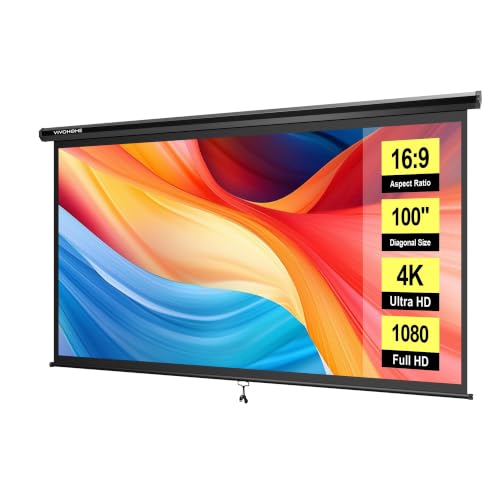
VIVOHOME 100 Inch 16:9 Pull Down Projector Screen, Black | Big-Screen Entertainment for Living Rooms and Movie Nights, Retractable Design, Auto-Locking Position, Wall or Ceiling Mount
Check price on Amazon
Outdoor Projector Screen with Stand featuring a Stake-Down Base-120 Inch 16:9 4K HD Portable Projector Screen Indoor Outdoor Movie Screen Lightweight Projection Screen with Carry Bag for Home,Backyard
Check price on Amazon
Portable Projector Screen with Stand Outdoor: Camping Projection Screen 80 inch 4K Movie Screen for Home Backyard Indoor 16:9 HD Night
Check price on Amazon
WRSION 100 Inch Projector Screen 16:9 HD 4K Wrinkle-Free | 16:9 Indoor Outdoor Projection Screen for Movies, Home Theater, Backyard Viewing and Presentations
Check price on Amazon