
Getting Started with Recliners: Your Complete Beginner's Guide
Ready to find your perfect recliner but not sure where to begin? This comprehensive guide walks you through everything you need to know — from understanding basic types to making your first confident purchase.
Welcome to the World of Recliners
Congratulations on taking the first step toward finding your ideal comfort companion! Whether you're furnishing a new home, upgrading your living room, or seeking therapeutic relief for back pain, a recliner can be one of the most rewarding furniture investments you'll ever make.
But with so many options available — power recliners, manual recliners, lift chairs, massage recliners, and dozens of other variations — it's easy to feel overwhelmed. That's exactly why we created this getting started guide. By the time you finish reading, you'll have a clear roadmap for navigating the recliner buying journey with confidence.
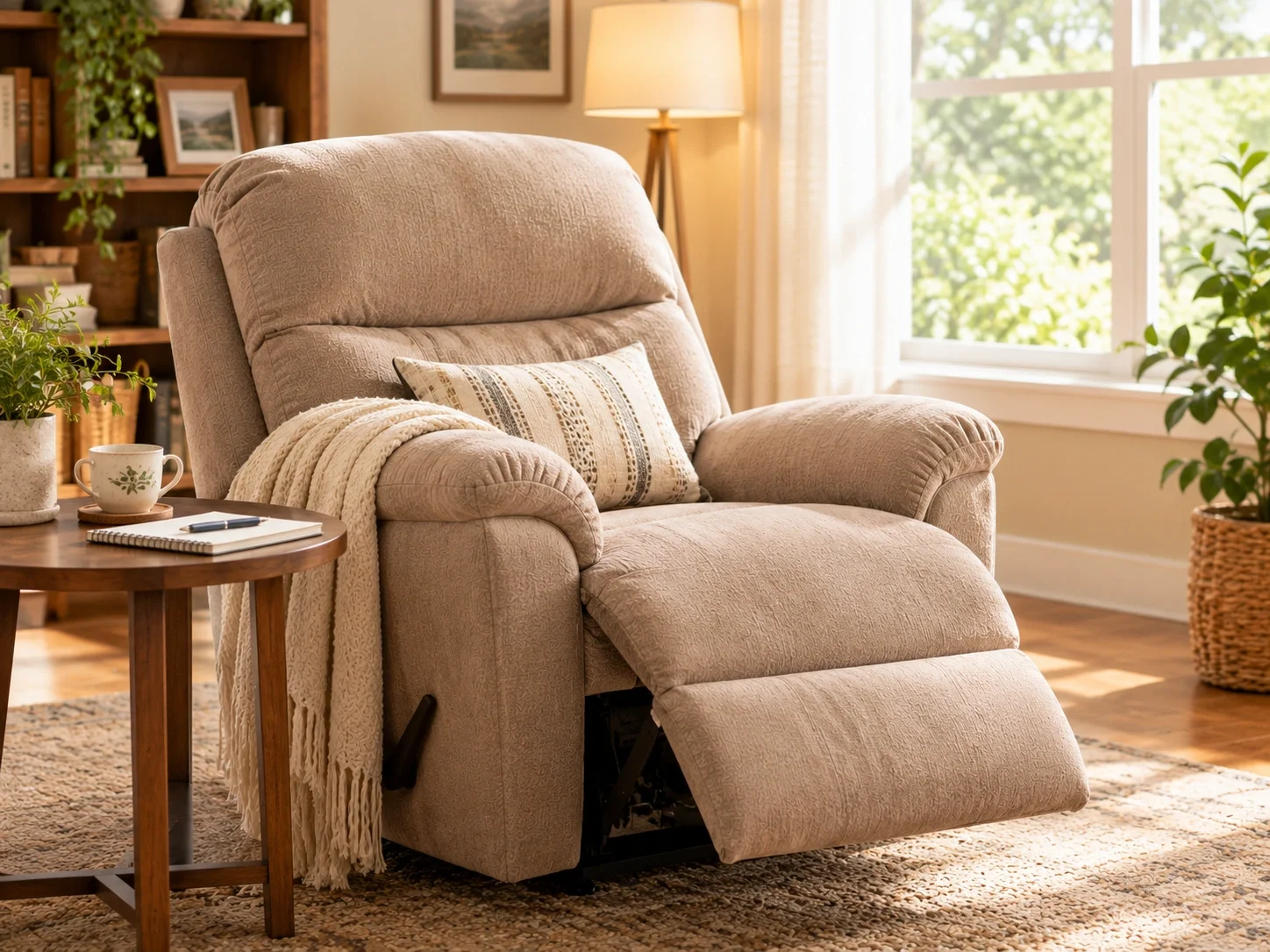
Pro Tip: Before diving into specific models, take a moment to think about how you'll primarily use your recliner. Watching TV? Reading? Napping? Mobility assistance? Your primary use case will guide every other decision.
Understanding Recliner Basics
At its core, a recliner is a chair that allows you to lean back and elevate your feet. But modern recliners have evolved far beyond this simple definition. Today's models offer everything from powered adjustments to built-in massage functions.
The Anatomy of a Recliner
Every recliner consists of several key components:
- Frame: The structural foundation, typically made of hardwood or metal. A quality frame is essential for durability.
- Reclining Mechanism: The system that allows the chair to recline — manual, power, or hybrid.
- Seat Cushion: Provides support and comfort; can be foam, memory foam, or spring-based.
- Backrest: Supports your spine and can often be adjusted independently from the footrest.
- Footrest: Extends to support your legs; integrated in most recliners.
- Upholstery: The covering material — leather, fabric, or microfiber.
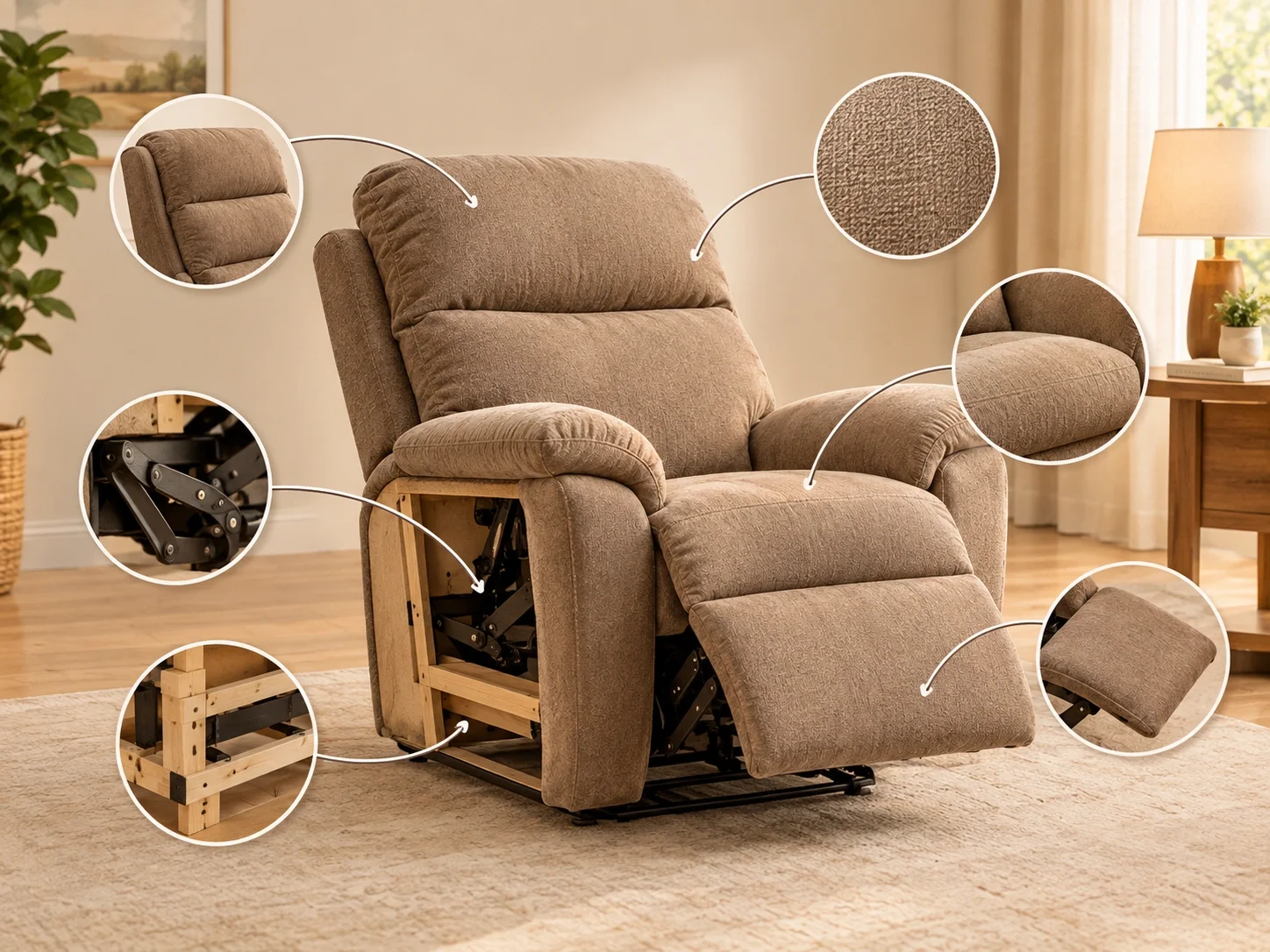
Understanding these components will help you evaluate quality and compare different models effectively. For a deeper dive into the various categories, explore our complete guide to recliner types.
Your 7-Step Getting Started Roadmap
Follow these seven steps to navigate the recliner buying process with confidence:
- Define your primary purpose: Will you use the recliner for watching TV, reading, sleeping, or mobility assistance? Your answer will narrow down the type of recliner you need. For example, if you struggle with standing up, a lift chair is the obvious choice. If you want therapeutic relief, consider a massage recliner.
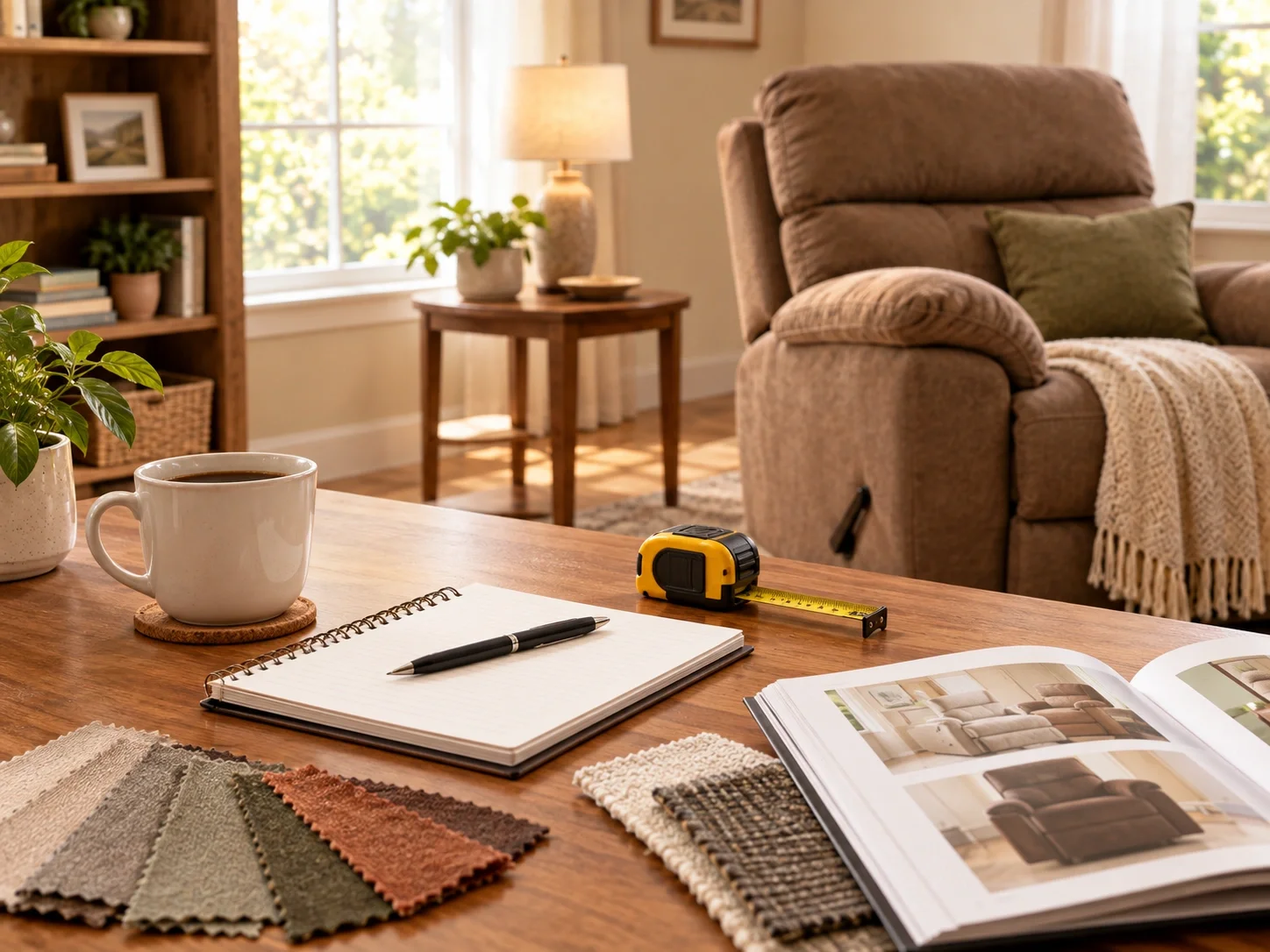
- Measure your available space: Recliners need clearance to recline fully. Measure your room, including doorways and hallways for delivery. Don't forget to account for the reclined position, not just the upright footprint. Wall hugger models are excellent for tight spaces — learn more about wall hugger recliners.
- Determine your budget: Recliners range from $300 for basic manual models to $3,500+ for premium power recliners with advanced features. Set a realistic budget before you start shopping. Explore budget-friendly options or luxury recliners depending on your range.
- Choose your mechanism: Decide between manual and power operation. Manual recliners are simpler and more affordable, while power recliners offer effortless adjustment with the touch of a button.
- Select your material: Consider your lifestyle when choosing upholstery. Leather recliners are durable and easy to clean, while fabric recliners offer more color options and a cozier feel. Households with pets might prefer microfiber recliners for their stain resistance.
- Test before you buy: If possible, visit a showroom to try different models. Pay attention to seat depth, back support, and how easily the mechanism operates. Our comfort testing tips will help you evaluate like a pro.
- Read reviews and compare: Before making your final decision, read customer reviews and compare models side-by-side. Use our recliner comparison guide to evaluate key features objectively.
Common Mistakes Beginners Should Avoid
Learning from others' mistakes can save you time, money, and frustration. Here are the most common pitfalls first-time recliner buyers encounter:
1. Not Measuring Properly
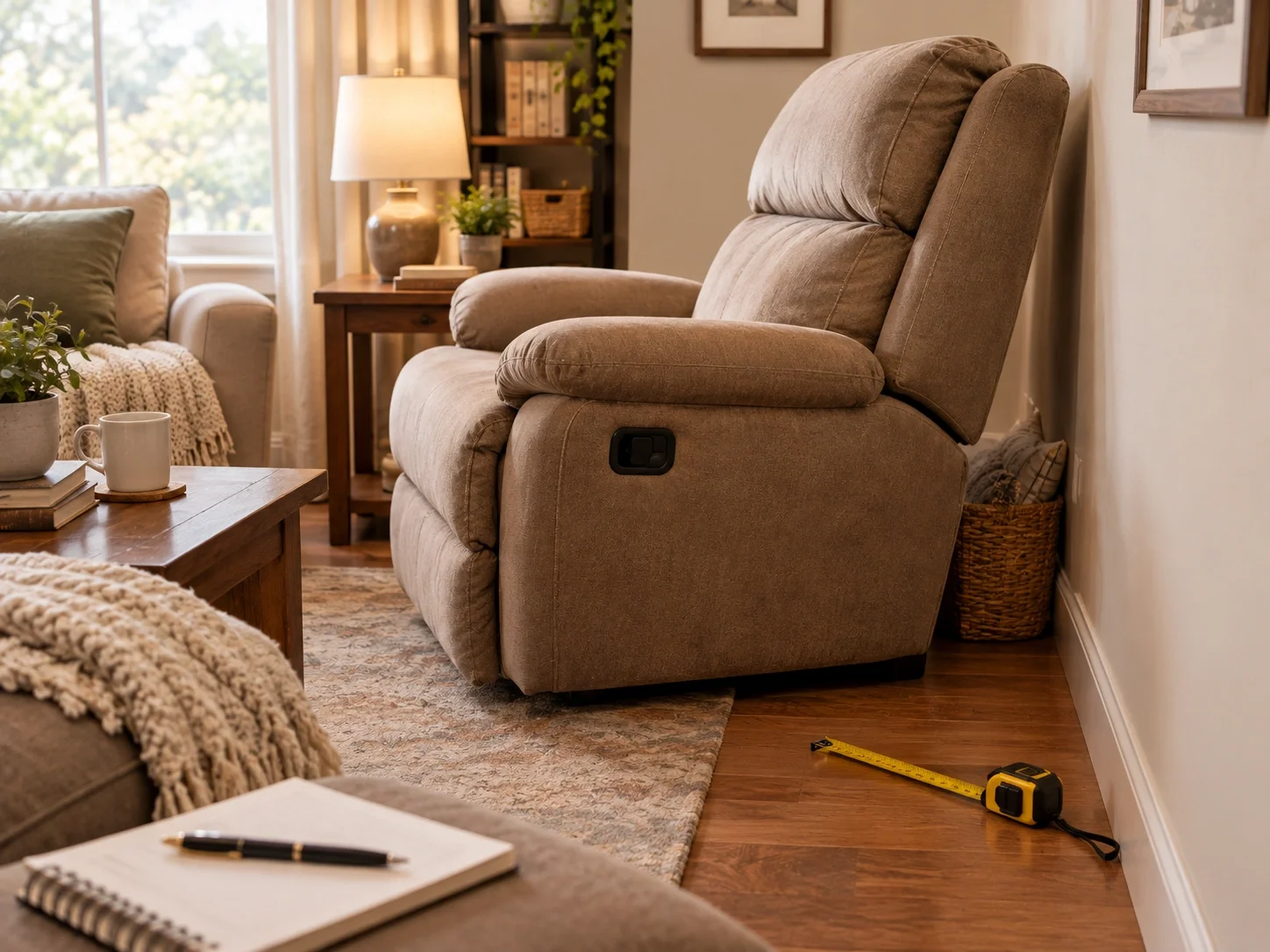
One of the biggest mistakes is buying a recliner that doesn't fit the space. Always measure both the upright and fully reclined dimensions. Consider the space needed behind the chair, the pathway for delivery, and the size of doorways. Our recliner sizing guide provides detailed instructions.
2. Choosing Style Over Comfort
While aesthetics matter, comfort should be your top priority. A beautiful recliner that isn't comfortable will gather dust. Take the time to test different models and prioritize ergonomic features like lumbar support and proper seat depth.
3. Ignoring Weight Capacity
Every recliner has a specific weight limit. Exceeding this limit can damage the mechanism and void the warranty. If you need extra support, look for big and tall recliners designed for higher weight capacities.
4. Overlooking Maintenance Requirements
Recliners require care to maintain their appearance and functionality. Before buying, understand what maintenance your chosen material and mechanism will need. Check our care and maintenance guides for more information.
5. Forgetting About Delivery and Assembly
Some recliners arrive fully assembled, while others require significant setup. Factor in delivery costs and assembly time before committing to a purchase.
Exploring Different Recliner Types
As a beginner, it's helpful to understand the main categories of recliners available. Each type serves a specific purpose and comes with its own set of advantages.
Power Recliners vs. Manual Recliners
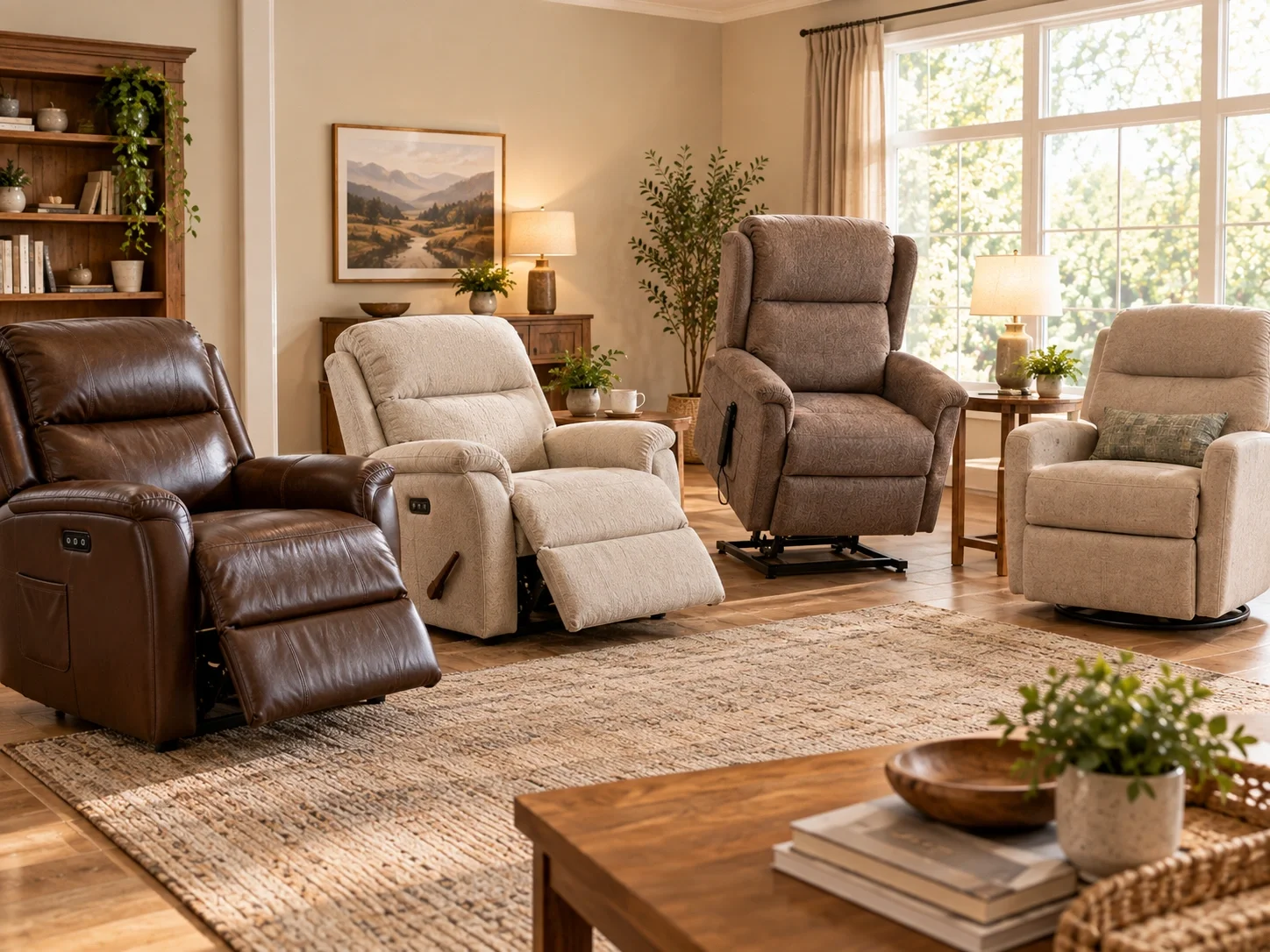
The most fundamental distinction is between power and manual operation. Power recliners use electric motors for smooth, effortless adjustment, while manual recliners require physical effort via a lever or push-back mechanism. Power models typically cost more but offer greater convenience, especially for users with limited mobility.
Specialty Recliners
Beyond the basics, you'll encounter specialized options like swivel recliners for 360-degree rotation, glider recliners for smooth rocking motion, and rocker recliners for traditional comfort. Each adds a unique feature that might be perfect for your needs.
Size Variations
From oversized recliners offering maximum room to small space recliners designed for compact living, there's a size for every space and body type. Twin recliners provide seating for two with independent controls.
For a comprehensive overview of all available options, visit our complete recliner types guide.
Planning Your Recliner Budget
Understanding what you can expect to spend at different price points will help you set realistic expectations and find the best value for your money.
Entry-Level: $300–$800
At this price point, you'll find quality manual recliners, basic fabric models, and some kids recliners. These chairs offer fundamental reclining functionality without advanced features. They're perfect for guest rooms, dorms, or first-time buyers on a budget.
Mid-Range: $800–$1,500
This is the sweet spot for most buyers. You'll find quality power recliners, leather recliners, and models with additional features like USB charging ports or basic heating. The build quality is noticeably better, with improved frames and mechanisms.
Premium: $1,500–$3,500+
At the premium tier, you'll find massage recliners, advanced zero gravity recliners, and high-end lift chairs with all the bells and whistles. These models feature top-tier materials, sophisticated mechanisms, and extended warranties.
For more detailed budget guidance, explore our best value recommendations and financing options if you prefer to spread out payments.

Your Next Steps
Now that you have a solid foundation, here's how to continue your recliner journey:
- Review our recliner buying checklist to ensure you don't miss any important considerations.
- Explore our complete buying guides for in-depth information on specific topics.
- Learn about recliner care and maintenance to protect your investment.
- Get inspired with room design ideas to create your perfect comfort space.
- Read our first recliner guide for additional beginner-focused advice.
Remember: Buying a recliner is a personal decision. Take your time, do your research, and trust your instincts. The perfect recliner is out there waiting for you!
If you have any questions along the way, don't hesitate to reach out through our contact page. We're here to help you every step of the way.
Top-Rated Recliners for Beginners
⚠️ AFFILIATE DISCLOSURE: This website contains affiliate links. As an affiliate Associate, we earn from qualifying purchases. If you make a purchase through these links, we may receive a small commission at no additional cost to you. Read our full affiliate policy.

Homall Recliner Chair, Recliner Sofa PU Leather for Adults, Black Recliners | Home Theater Seating with Lumbar Support, Reclining Sofa Chair for Living Room
Check price on Amazon
HAPPYMONT Massage Recliner Chair, Recliner Sofa Fabric for Adults, Recliners Home Theater Seating with Lumbar Support, Reclining Sofa Chair for Living Room, Ink
Check price on Amazon
Korser Recliner Chair, 360° Swivel Rocker Recliner for Adults, Rocking Recliners with Massage & Heat, Manual Reclining Glider with Cup Holders, Nursery Rocking Chairs for Nursery, Living Room, Gray
Check price on Amazon
OLIXIS Recliner Chair, Reclining Sofa Chair with 3 Adjustable Angles | Fabric Sofa Chair Seat, Home Theater Seating with Lumbar Support, Footrest for Living Room, Recliners, Bedroom, Gray
Check price on Amazon
BestMassage Recliner Chair No Massage Function | Leather Black | with Lumbar Support, Adjustable Push Back, Wide Arm & Footrests, Padded Seat | Easy Assembly | for Living Room, Home Theatre
Check price on Amazon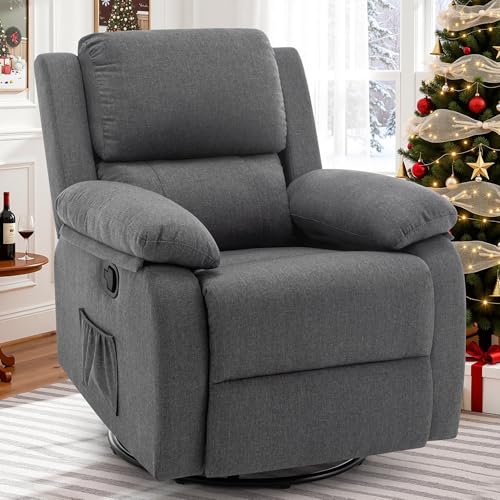
Korser Recliner Chair, 360 Swivel Rocker Chair for Adults, Small Rocking Recliner for Small Spaces, Upholstered Fabric Glider Recliner Nursery
Check price on Amazon